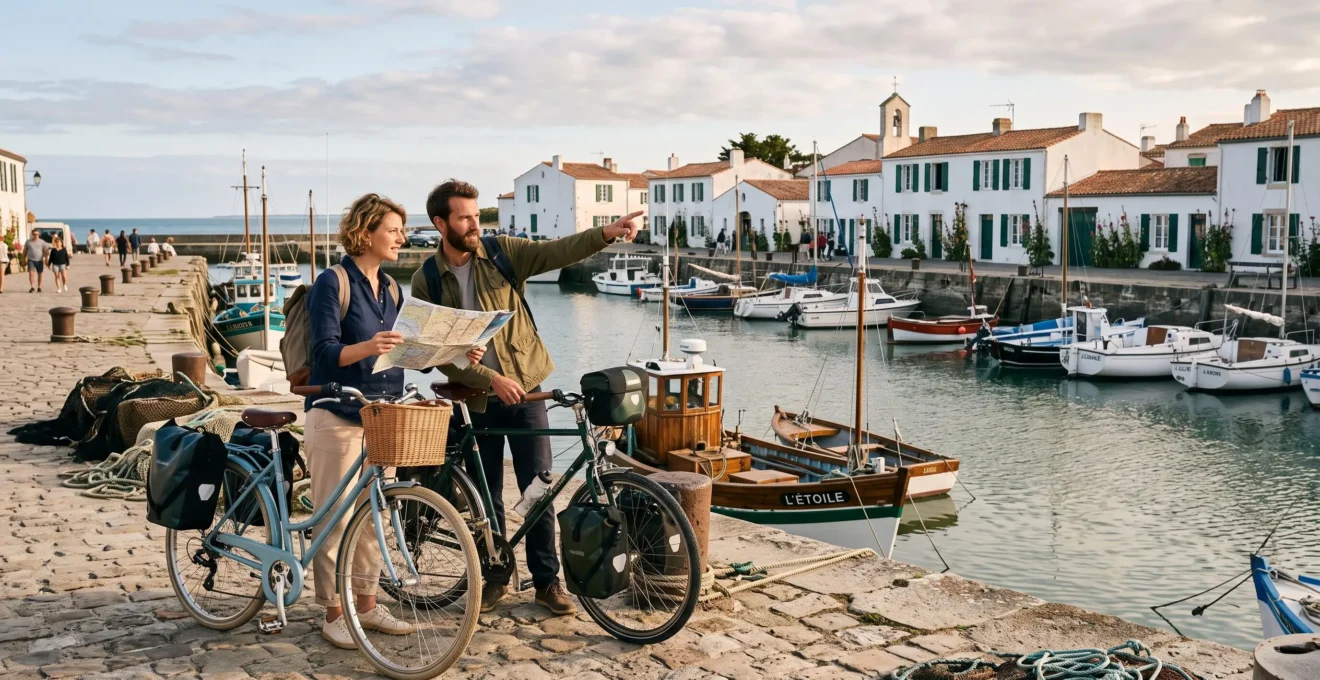
Planning an unforgettable stay on Île de Ré gets much easier when you stop trying to “see everything” and make three clear choices first: when you’ll come, which village you’ll base yourself in, and how you’ll move around day to day.
If you’re thinking “I don’t know where to start planning my trip”, this guide is built for that moment. You’ll get concrete decision criteria (not vague inspiration), plus simple itinerary building blocks you can reuse whether you have a long week or just a few days.
Your 3 decisions for a smooth Île de Ré trip
- Pick your period: aim for shoulder season if you want easier logistics and a calmer feel.
- Choose a base village: match it to your rhythm (harbor life vs quieter salt-marsh landscapes vs family calm).
- Plan mobility early: decide if you’ll go mostly by bike, mix bike + buses/navettes, or keep a car.
When Is the Best Time to Visit Île de Ré?
Direct answer: If you want to avoid summer crowds and keep planning simple, prioritize shoulder season (spring or early autumn) rather than peak summer. You’ll typically find it easier to move around and book what you want—while still enjoying an “island” rhythm.
Île de Ré is a major tourism area within Charente-Maritime, where activity is described as highly seasonal by France’s national statistics institute. In its regional analysis, Insee notes that tourism employment is concentrated around La Rochelle, Royan, and the islands of Ré and Oléron, with “une saisonnalité très marquée” (strong seasonality) in the department (Insee Analyses Nouvelle-Aquitaine n°30, data 2015).
What that means for you in practice: timing changes the feel of the island as much as your itinerary does. So start here before you compare villages or activities.
How do high season, shoulder season, and off-season change your experience?
High season (especially summer school holidays) tends to bring the most pressure on accommodation, parking, and popular beaches. If you’re coming then, your “unforgettable” stay will depend less on adding activities and more on booking early and choosing a base that reduces daily transport friction.
Shoulder season is often the sweet spot for a first trip: many places are still operating, cycling is comfortable for most travelers, and you can keep your days flexible without constantly anticipating bottlenecks.
Off-season can feel wonderfully local and slow, but some services may run on reduced schedules. If you go this route, plan your days around what’s reliably open (markets, walks, key sights) rather than expecting a full summer-style offer.
What kind of weather should you expect, and where can you check reliably?
Rather than relying on generic “it’s sunny” claims, check a reference forecast close to departure and use it to choose your daily rhythm: bike-heavy days on stable weather windows, and “town + market + museum/heritage” days when it’s unsettled.
I’m not adding monthly climate figures here because none are provided in the source pack. If weather is a deciding factor for you (kids, cycling comfort, beach time), your best move is to verify forecast and local guidance shortly before you travel.
A practical comparison: summer vs shoulder season (a realistic first-timer scenario)
Cas pratique
Imagine you have 4 days and you want a mix of beaches, cycling, and port life. In peak summer, you’ll likely need to lock in accommodation and bike rentals early, start days earlier, and be stricter about where you park (or avoid driving). In shoulder season, you can keep later starts, decide beach vs village walks based on the day’s weather, and stay more spontaneous—without spending your energy on logistics.
Which Villages and Areas Should You Base Yourself In?
Direct answer: For a first stay, choose your base village based on your daily rhythm: harbor energy and central access (Saint-Martin-de-Ré), or a quieter, heritage-focused atmosphere near salt marsh landscapes (Ars-en-Ré), or a calm family-oriented base where cycling feels easy.
Your base is your “reset point” between beach time, markets, and rides. Pick it well and your itinerary becomes simple: shorter transfers, fewer decisions, less stress.
Is Saint-Martin-de-Ré a good base for a first trip?
Saint-Martin-de-Ré is often a practical first base because it gives you a port-town atmosphere and a good anchor for planning: you can build days outward (beach, markets, cycling loops) and return to a lively center in the evening.
To keep this guide strictly evidence-based, I’m not adding claims about “the most popular” or “the busiest” villages—those would require explicit, dated visitor data not included in the provided sources.
Why consider Ars-en-Ré and the salt marshes area if you want calm?
If your idea of memorable is more “slow mornings + long rides + heritage details” than nightlife, Ars-en-Ré is a strong candidate. According to the official tourism office, Ars-en-Ré is a village historical d’Ars-en-Ré with a church whose foundations date back to the 7th century, and it’s presented as an old village with deep roots on the island.
Use this area as a base if you want quick access to wide open landscapes and a quieter end-of-day feel—then plan “port-town time” as a day trip rather than your default evening setting.
How do you choose the right village for your profile (couple vs family vs first-timer)?
Make your choice with three practical criteria you can check on a map before booking: where your must-dos sit (beach vs marshes vs port), how you’ll move (bike-only or mixed), and what you want at night (quiet streets vs a livelier harbor stroll).
Quick rule: if you’re a couple who wants evening ambiance, base closer to port life; if you’re a family prioritizing calmer nights and easy rides, choose a base that reduces “end-of-day commuting” and keeps cycling routes straightforward.
- You want lively evenings and easy “stroll back home” dinners:
Base in or near a port-centered village (for many first-timers, Saint-Martin-de-Ré is a practical reference point).
- You want heritage calm and big open landscapes:
Consider Ars-en-Ré and nearby salt-marsh scenery, and treat busier harbors as day trips.
- You’re traveling with kids and want low-friction days:
Prioritize “sleep + beach + market” simplicity and choose a base that minimizes daily transfers.
How to Get Around the Island
Direct answer: The easiest way to get around Île de Ré for many visitors is to build your days around cycling, then use local public transport as a backup for longer hops or bad-weather days. A car can work, but it adds parking constraints in busy periods.
If you’re wondering “can we manage without renting a car”, start by matching transport to your base village and your trip length. If your must-sees are spread across the island and you have limited days, mixing bike + public transport usually reduces stress compared with driving everywhere.
Is cycling really the most practical option?
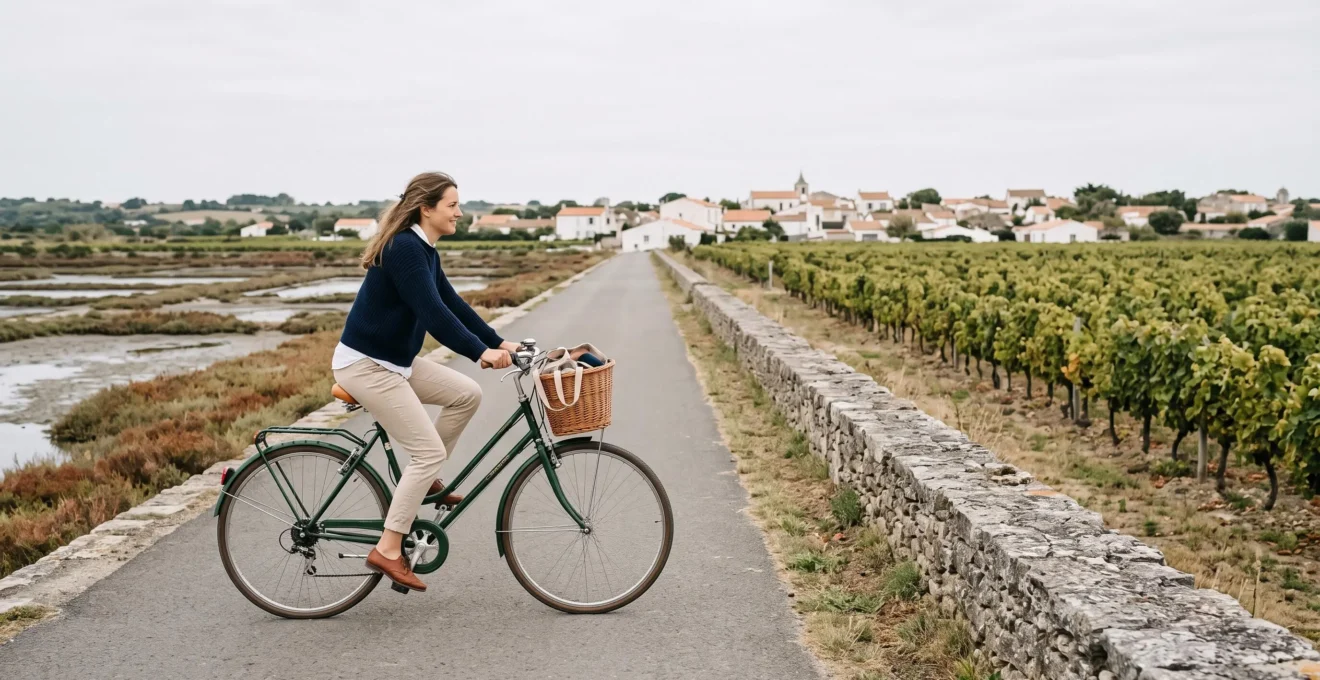
Cycling is popular on Île de Ré because it fits the island scale and lets you stop easily for beaches, villages, and markets. The key is to plan your rides like mini-itineraries: one coastline stretch, one village stop, one “treat” stop (market/harbor), then ride back before you’re tired.
If you’re not a confident cyclist, you can still build a bike-based stay by choosing shorter loops and avoiding “cross-island” ambitions every day.
What public transport exists on Île de Ré?
There is a structured public transport offer on the island. The Communauté de Communes de l’Île de Ré explains that it combines a regional bus line (line 150, reinforced by lines 151 and 152 in summer) and free village shuttles called RespiRé.
If you want the most reliable, up-to-date details before you arrive, check the réseau de transport en commun insulaire page from the local authority (it includes service periods and practical notes).
What about driving and parking?
Driving can make sense if you’re carrying lots of gear or you’re staying in a spot where you’ll rely less on daily trips. The trade-off is simple: the busier the period, the more driving adds friction (parking, timing, and the temptation to “overpack” your days).
If you do bring a car, use it strategically: park once, then switch to bikes for local loops. That way you keep the convenience without building your whole stay around car logistics.
A one-day, bike-first route example you can copy
Here’s a simple pattern that works well for first-timers: start with an easy morning ride, add a market stop before lunch, then choose one “big” afternoon focus (beach or a long coastal walk). Keep the return ride shorter than the outbound ride—your energy drops faster than you expect.
What to See and Do During Your Stay
Direct answer: A memorable Île de Ré itinerary usually balances one iconic highlight per day (beach, port village, salt-marsh landscapes) with small daily pleasures (markets, coastal walks, cycling lanes through vineyards).
Instead of stacking “must-sees”, aim for a rhythm: one anchor activity, one food/market moment, one unplanned detour (a viewpoint, a quiet lane, a small harbor). That’s what keeps your days feeling like an island escape rather than a checklist.
Which experiences feel “essential” on Île de Ré?
For most first stays, three experiences create that unmistakable island memory: time on the beach, a port-village stroll, and a ride through open landscapes where you can feel the space change between villages and the coast.
If you’re choosing between two similar activities, pick the one that reduces transfers. The less time you spend “getting there”, the more you’ll remember the place itself.
How do you fit markets and local food into your plan?
Markets work best as itinerary anchors. Plan a morning around them: arrive hungry, buy picnic basics, then ride or walk to a beach or viewpoint. This single move often upgrades the whole day because it gives you a natural pace and an easy lunch plan.

How do you balance famous spots and quieter corners?
A practical trick: pick one “well-known” stop per day, then pair it with something inherently calm (a long cycle segment, a coastal walk, or time near salt-marsh landscapes). That way, even if you hit a busier moment, your day still feels spacious.
If you’re traveling in a peak period, your calm moments will come from timing (earlier starts, longer midday breaks) and routing (choosing loops rather than out-and-back rides).
Planning Your Itinerary Step by Step
Direct answer: Build your Île de Ré itinerary in this order: dates → base village → daily mobility plan → day-by-day anchors. This prevents the classic beginner mistake: picking activities first and discovering later that transfers eat your time.
Here’s how to turn everything above into a plan you can actually follow—without over-scheduling.
- Choose your period
If you’re crowd-averse, favor shoulder season; if you must travel in peak summer, accept that booking and timing matter more than adding extra stops.
- Pick your base village
Decide what you want most evenings: harbor energy (often easier in central, port-oriented villages) or quiet heritage vibes (Ars-en-Ré is a good reference point for that atmosphere).
- Decide how you’ll move
Plan for bike-first days, and keep public transport as a backup option—especially if you’re unsure about longer rides every day.
- Set one anchor per day
One “big” focus is enough: beach time, a long ride, or a village/heritage day. Add a market stop when you can—it naturally sets your rhythm.
- Leave 20–30% of each day unscheduled
This is where the island becomes memorable: detours, a longer café stop, a sunset walk, a second swim.
How many days do you need to explore Île de Ré properly?
You can enjoy Île de Ré in a short break, but “properly” depends on your rhythm. If you want an itinerary that feels unhurried, plan enough time for at least: one beach-heavy day, one village/port day, and one longer cycling day. With fewer days, you’ll still get highlights—just make your base and mobility choices even tighter.
A simple 3-day itinerary example (easy to adapt)
This is a deliberately light framework you can customize to your base village and weather:
Day 1: Settle in, do a short orientation ride or walk, and keep the evening local to your base (no big transfers).
Day 2: Market morning + picnic plan, then a beach or coastal walk afternoon. Keep a relaxed return route.
Day 3: One longer ride day: choose either port villages or salt-marsh landscapes as your main theme, and build in a long café break to avoid “rushing the island”.

What is the best time to visit Île de Ré to avoid crowds?
To reduce the risk of crowds, plan around shoulder season (spring or early autumn) rather than peak summer. Tourism in the wider Charente-Maritime area is described as strongly seasonal by Insee, which supports the idea that summer peaks can change the on-the-ground experience.
Where should a family stay on Île de Ré for a quieter experience?
Choose a base that minimizes daily transfers and keeps your “default” days simple: nearby beach time, an easy market stop, and short bike loops. If you want a calmer heritage atmosphere, Ars-en-Ré is a good reference point; for more evening harbor energy, look to more port-centered bases.
Can you get around the island without a car?
Yes, many visitors can plan bike-first days and rely on local public transport as backup. The Communauté de Communes de l’Île de Ré describes a network combining regional bus lines (reinforced in summer) and free village shuttles RespiRé, which can help you connect areas when you don’t want to cycle the full distance.
One last sanity check before you book anything: if your plan feels stressful on paper, it will feel stressful on the island. Make the three core decisions (period, base village, mobility), then keep each day built around just one anchor—this is the simplest way to plan an unforgettable stay on Île de Ré without the fear of missing out.